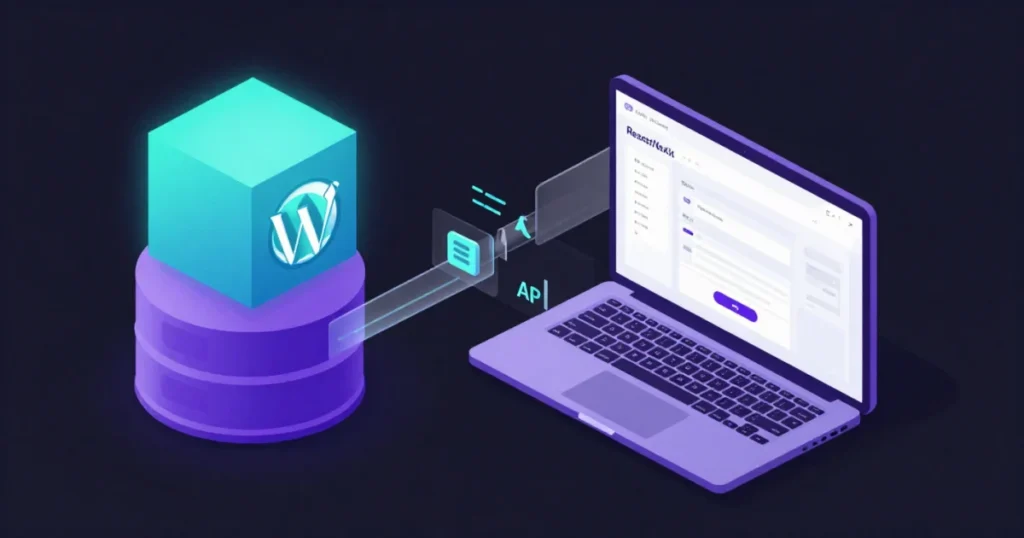
For over a decade, WordPress has dominated the web as a monolithic Content Management System. You write your content in the dashboard, and the WordPress core, powered by PHP and your theme, renders the visual output on the front end.
However, as user expectations for page speeds grow and omnichannel content distribution becomes mandatory, a new architectural shift is taking over: Headless WordPress.
What Exactly is Headless WordPress?
In standard web design, the backend (where you manage content) and the frontend (what the user sees) are tightly bound together. In a Headless or Decoupled architecture, the “head” (the frontend website layout) is completely chopped off from the body (the backend WordPress content management system).
WordPress is used strictly for what it does best: handling the database, managing user authentication, storing posts, and generating data. Instead of rendering a theme, WordPress delivers this content as raw data through the WordPress REST API or GraphQL.
The frontend can then be custom-built using modern JavaScript frameworks like Next.js, React, or Vue.js, which pull data from the WordPress API.
The Core Advantages of Going Headless
Shifting to a decoupled architecture requires development effort, but the technical benefits for modern web platforms are unmatched:
1. Blazing Fast Loading Speeds (Perfect Core Web Vitals)
Because the frontend is separated from the heavy WordPress core and theme engines, it can be compiled into static HTML files using Jamstack principles. This results in instant page transitions, perfect security, and unbeatable Core Web Vitals scores that are highly favored by search engines.
2. Complete Visual and Layout Freedom
Designers and front-end engineers are no longer limited by what a WordPress theme or a page builder can do. You can build deeply customized, futuristic user interfaces using React or Next.js, while your marketing team continues to use the familiar WordPress Gutenberg editor back-end to write posts.
3. Absolute Omnichannel Distribution
A headless system turns your WordPress site into a central Data Architecture Standard. You can stream the exact same blog post data simultaneously to your desktop website, a mobile app, smart displays, and AI LLM crawlers without needing multiple databases.
Is Headless Right for Everyone?
While the architecture sounds highly advanced, it comes with a few trade-offs that a web developer must keep in mind:
- Plugin Compatibility Loss: Many traditional plugins that rely on changing the visual front end (like some contact forms or layout utilities) will stop working because there is no theme structure to hook into.
- Higher Technical Complexity: You will need advanced JavaScript skills to manage and host two separate environments (the WordPress database domain and the Next.js frontend domain).
Conclusion: Setting the Standard for Modern Web Tech
Headless WordPress represents the logical evolution of the web. By separating data management from visual rendering, it allows platforms like Dotextalk Academy to advocate for ultra-secure, light, and future-proof web engines. If you are looking to build a high-performance system capable of managing high traffic while keeping data structures clean for the AI era, decoupled architecture is the definitive answer.